 PerroAmante
Bathing
I do not know how often to bathe my dog, or with what
Understand the skin, bathe well in 20 minutes without drama and know when the smell is a matter for the vet.
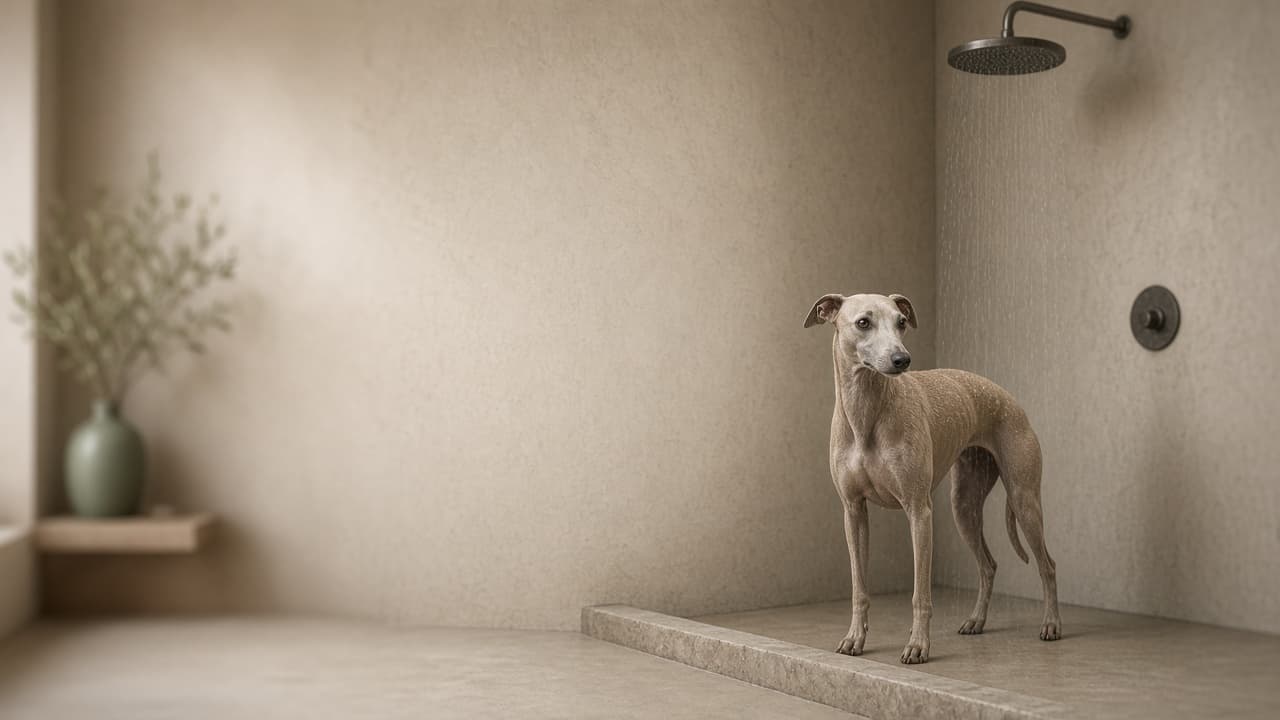
What is going on
Bathing is one of the things that raises the most doubts and attracts the most contradictory advice. Every week, every month, never. With the household shampoo, with neutral soap, with water alone. Meanwhile the dog smells, scratches or hides when it hears the water running.
A dog's skin has a different pH from ours and a layer of oil that protects it from water, dust and microorganisms. Every bath removes part of that layer. With a suitable shampoo and a reasonable interval, the skin replaces it without trouble. With a human shampoo, or a bath every few days, the skin is left defenceless: it dries, itches, produces more oil to compensate and, paradoxically, the dog smells more.
Dog smell has several sources: skin oil, moisture trapped in the coat, the ears, the mouth, the glands beside the tail. A bath solves only the first and, partly, the second. That is why some freshly bathed dogs still smell: the problem was not where the washing happened.
The other half of bathing is the dog. A dog that associates the tub with cold water in the face, noise and being grabbed will never cooperate. A dog taught slowly, with warm water, no rush and something tasty at the end, eventually climbs in on its own. No shampoo solves that part, but it is the part that decides whether bath time is a drama or a quiet moment.
The usual road and the PerroAmante road. What people usually try: human or baby shampoo because soap is soap, weekly baths with harsh products to cover the smell, or the opposite extreme, never bathing because dogs smell and that is that. They fail because none of them respects the skin or asks where the smell comes from. The Protocolo PerroAmante works in a different order: Understand the skin and coat, Care with a suitable shampoo, the right technique and the right interval, and Maintain with timely refills and brushing between baths. It is like washing a wool jumper: you do not throw it in with the sportswear at sixty degrees, and you do not leave it a whole winter unwashed either.
Common causes
- 01
Unsuitable shampoo
Human shampoos, baby ones included, have a different pH and detergents that strip too much oil from a dog's skin.
- 02
Too many baths
A weekly bath gives the skin no time to rebuild its protective layer. The result is dry skin, itching and more smell.
- 03
Incomplete rinsing
Shampoo left in the coat, especially in the armpits, groin and under the collar, irritates the skin for days.
- 04
Insufficient drying
A coat that stays damp at the base, especially in double-coated breeds, smells musty and encourages irritation.
- 05
The smell is not from the coat
Ears, mouth, anal glands or inflamed skin produce smells no bath removes. More bathing only damages the skin.
- 06
Learned fear
Cold water, noise, rushing or one bad experience teach the dog to associate baths with stress and to fight every time.
Warning signs to watch
- Smells bad within a few days of a bath
- Scratches more after bathing, or dandruff and dry skin appear
- Dull, brittle coat or greasy patches
- Red or irritated skin in armpits, groin or under the collar after a bath
- Musty smell that lingers even when the coat seems dry
- The smell comes from one spot: ears, mouth or the tail area
- Trembles, hides or tries to escape at the sound of running water
When to contact a vet
See the vet if, after a bath, you notice widespread redness, bumps, sores or an itch that does not settle in two or three days, if the smell is intense and located in the ears, mouth or tail area, or if hair falls out in clumps leaving skin exposed. A strong smell that a proper bath does not remove is not a hygiene issue: it is a signal.
If your dog has very sensitive skin, a known condition, or is a puppy under three months, ask your vet which shampoo to use and how often before bathing. And if the fear of water is so intense that the dog hurts itself trying to escape, a trainer can help more than any bathing technique.
This information is educational and does not replace a veterinary assessment.
Everyday care
Interval by coat type
For most healthy dogs, a bath every four to eight weeks. Short coat and normal skin, towards eight; long coat or a very active life, towards four. Between baths, brush and damp cloth.
Dog shampoo, matched to the skin
Formulated for dogs, without strong fragrance. For sensitive skin, a mild fragrance-free one; for long coats, one with conditioner. Dilute if the maker allows it: it spreads better and rinses faster.
Technique in order
Brush before wetting. Warm water, from the neck backwards, never spraying the head. Massage for a couple of minutes, rinse until the water runs clear, and clean the face with a damp cloth at the end.
Thorough drying
Absorbent towel first, pressing rather than rubbing. Then a dryer on low heat at a distance, or open air if it is warm. Folds, ears and between the toes, always dry.
A calm bath
Non-slip mat, water ready beforehand, low voice and treats. The first few times, just step into the empty tub and out again. The real bath comes once that is boring.
Between baths
Alcohol-free wipes for paws and belly after walks, brushing two or three times a week and dry ears. That way the interval between baths stretches without smell.
Care
Solutions for this problem
A short selection. Every product passed our 7-criteria score; we tell you what it does and does not do.
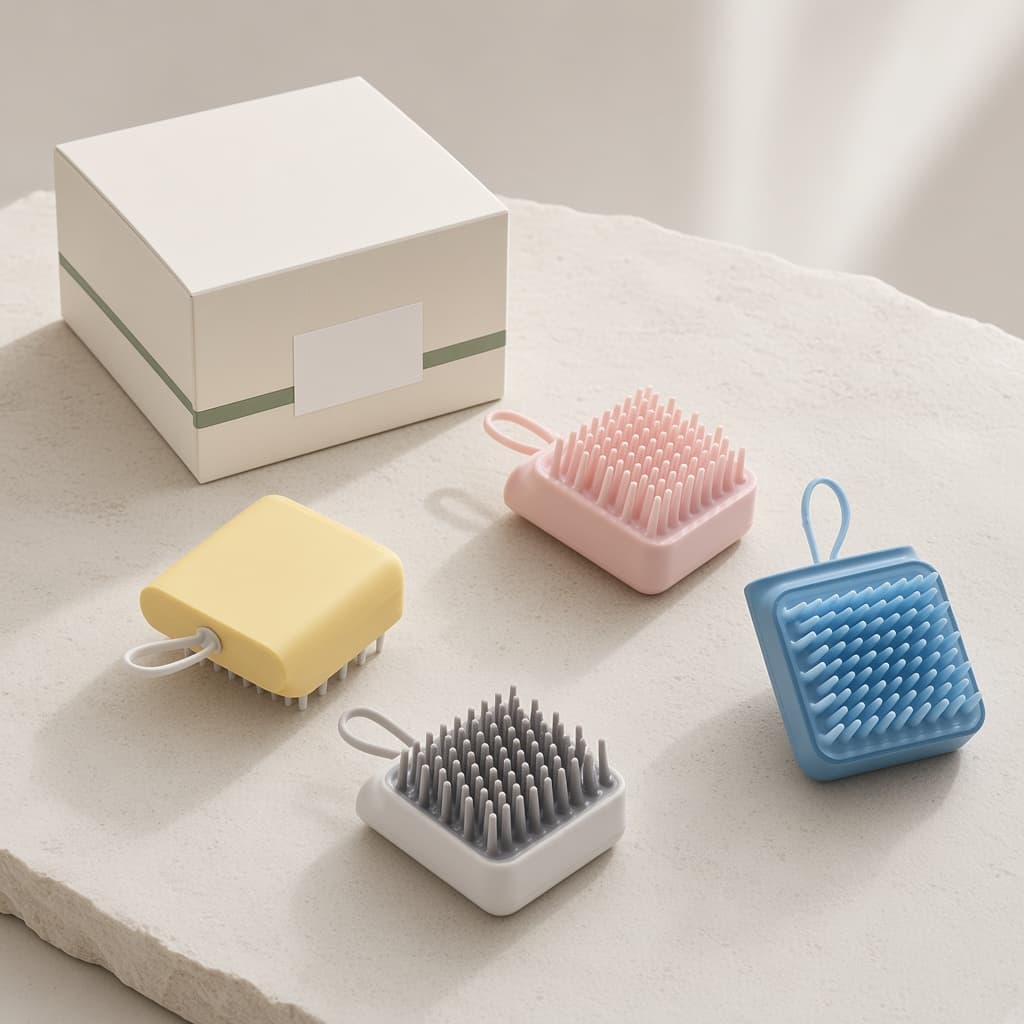
Silicone bath brush with shampoo reservoir
Works the shampoo down to the skin and massages, so the bath does not stop at the tips of the coat.
€4.90
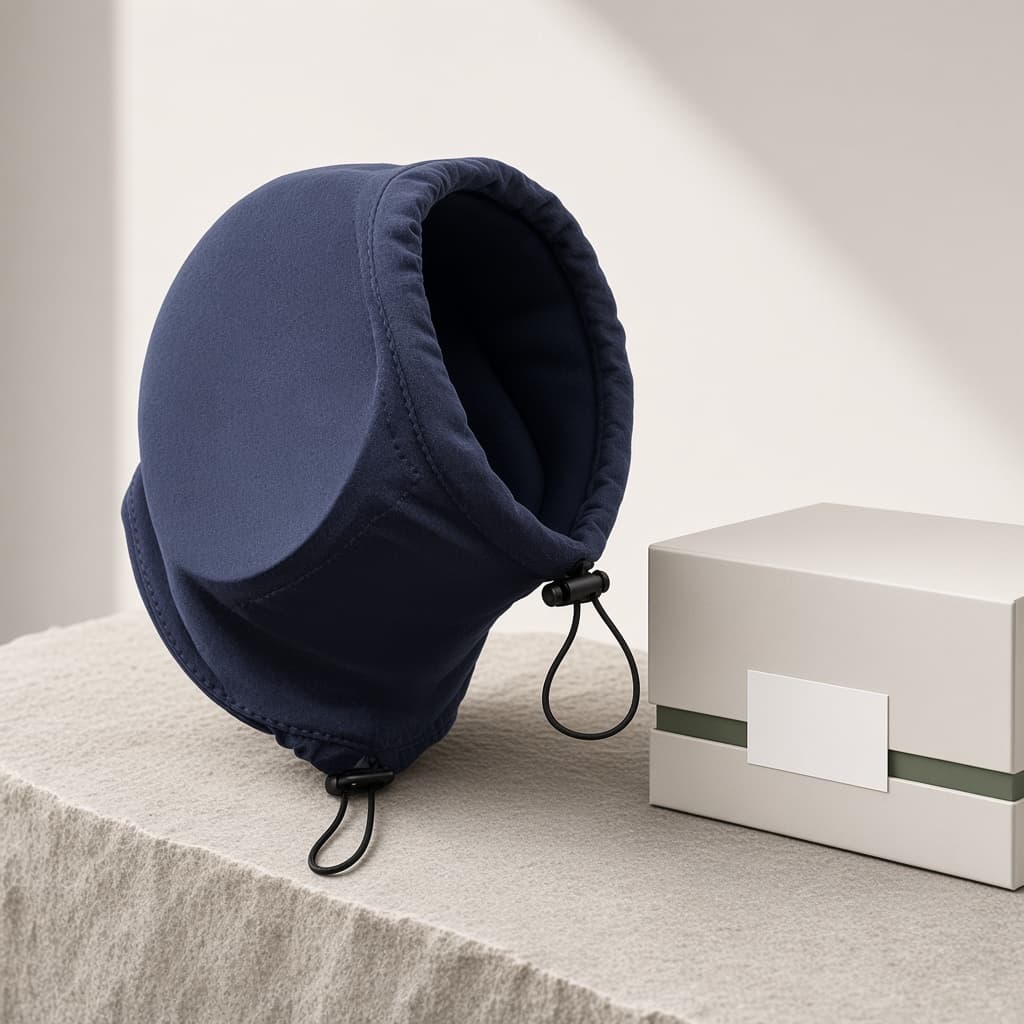
Breathable ear snood for bathing and drying
Holds the ears back and out of the water during the bath and the dryer.
€23.90
 Subscribe and save
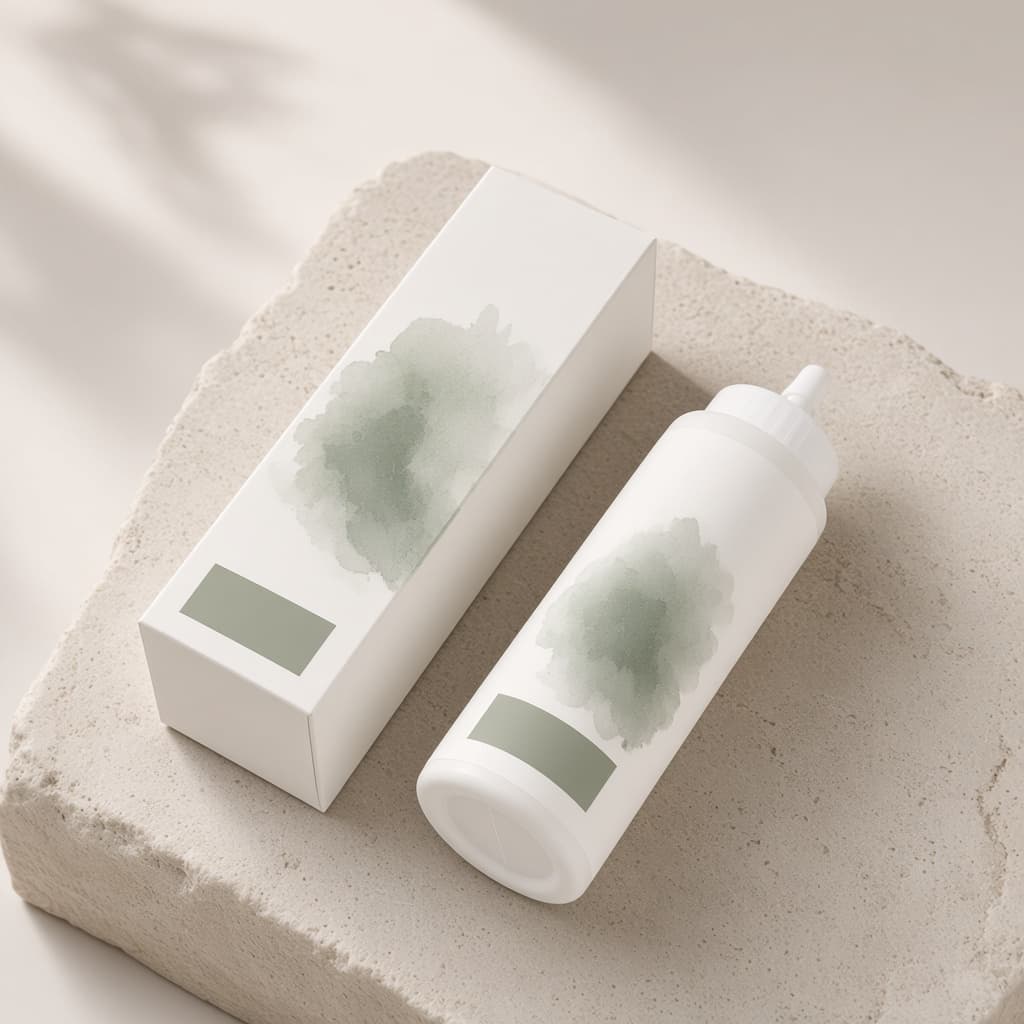
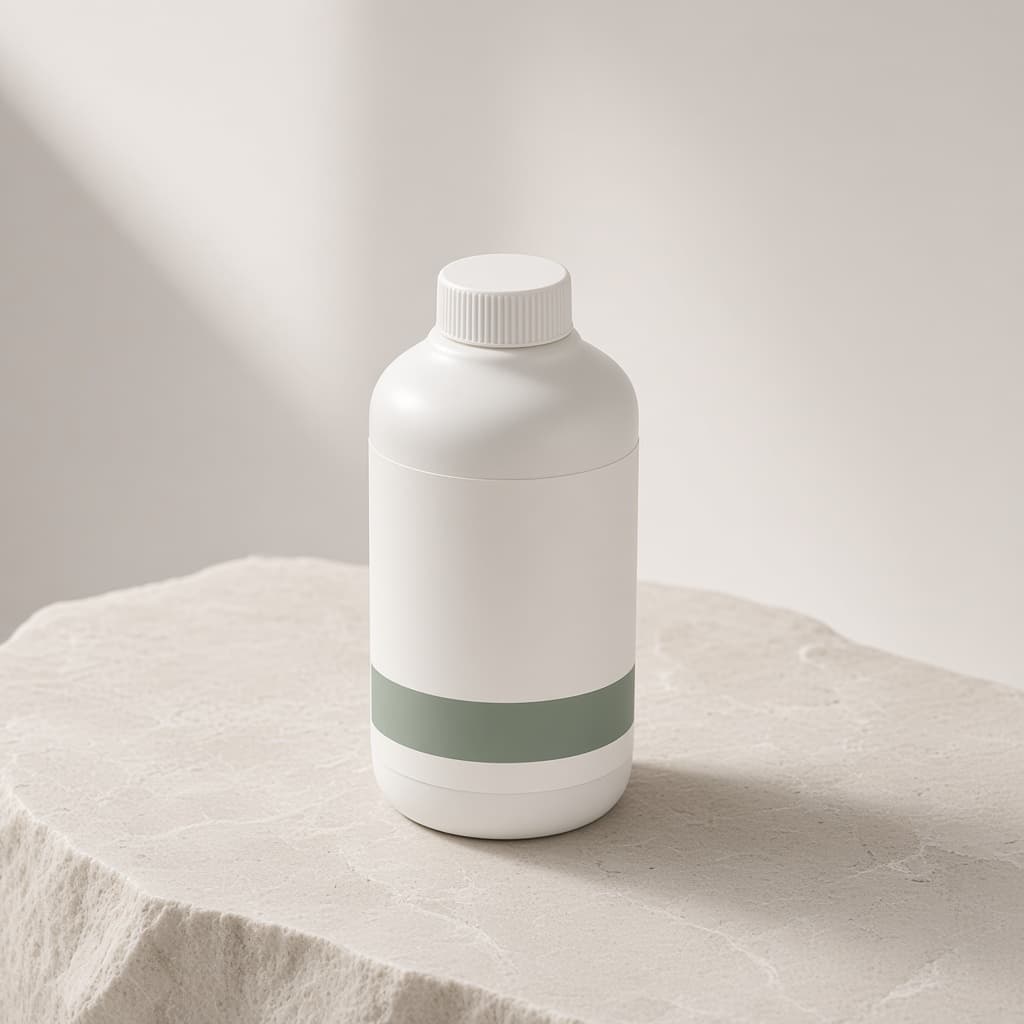
Drying powder for dog ears, 20 g
Powder for the outer ear area after bathing or the beach that aids manual drying without treating any condition.
€14.90
 Subscribe and save
Waterless oatmeal shampoo
Cleans the coat and leaves a soft feel without removing itch.
€16.90
Compare
| Compare | Silicone bath brush with shampoo reservoir | Breathable ear snood for bathing and drying | Drying powder for dog ears, 20 g | Waterless oatmeal shampoo |
|---|---|---|---|---|
| Format | brush | textile | Powder in a dosing bottle | shampoo |
| Best for | Works the shampoo down to the skin and massages, so the bath does not stop at the tips of the coat. | Holds the ears back and out of the water during the bath and the dryer. | Powder for the outer ear area after bathing or the beach that aids manual drying without treating any condition. | Cleans the coat and leaves a soft feel without removing itch. |
| Role in the routine | Core | Core | Support | Core |
| Reorder | One-time | One-time | Subscribe every 90 days, -10% | Subscribe every 45 days, -10% |
| Price | €4.90 | €23.90 | €14.90 | €16.90 |
Community experiences
PerroAmante Circle
Join the PerroAmante Circle
Your first purchase opens the door to our private community: problem-specific discussions, local vet and groomer recommendations, and reorder support.
Guides and articles
Recommended professionals
Vets and groomers who help with this problem, recommended by members.
Frequently asked questions
How much bathing is too much?
More than one bath every two weeks, unless your vet says otherwise. The skin gives you the proof: if dandruff, itching or more smell appear within days of a bath, you are overdoing it. At the right interval the skin regulates itself and the dog smells less, not more.
Can I use my shampoo or a baby shampoo?
No. A dog's skin pH is different and human detergents strip the protective oil. The proof: many dogs that scratch after baths stop once switched to a shampoo formulated for them. A quality bottle lasts half a year.
Is this not just another shop with forty shampoos?
No. For bathing there are three or four product types that make sense depending on skin and coat, and that is what you will find. Each has passed an internal 7-criteria score and we tell you what it does and what it does not. You choose in two minutes and never buy blind again.
What if my dog still smells after the bath?
Then the smell was not coming from the coat. Get close and locate it: if it is the ears, the mouth or the tail area, each has its own page and routine, and sometimes its own vet visit. More bathing will not solve it and will damage the skin.
Join the PerroAmante Circle
Your first purchase opens the door to our private community: problem-specific discussions, local vet and groomer recommendations, and reorder support.