PerroAmante
Why does my dog scratch so much: read the skin before buying anything
Before you try another shampoo, learn to observe. Where the scratching happens, when, and what came before tells you more than any label.
By Equipo PerroAmante · 14 June 2026 · 6 min read · Veterinary editorial team
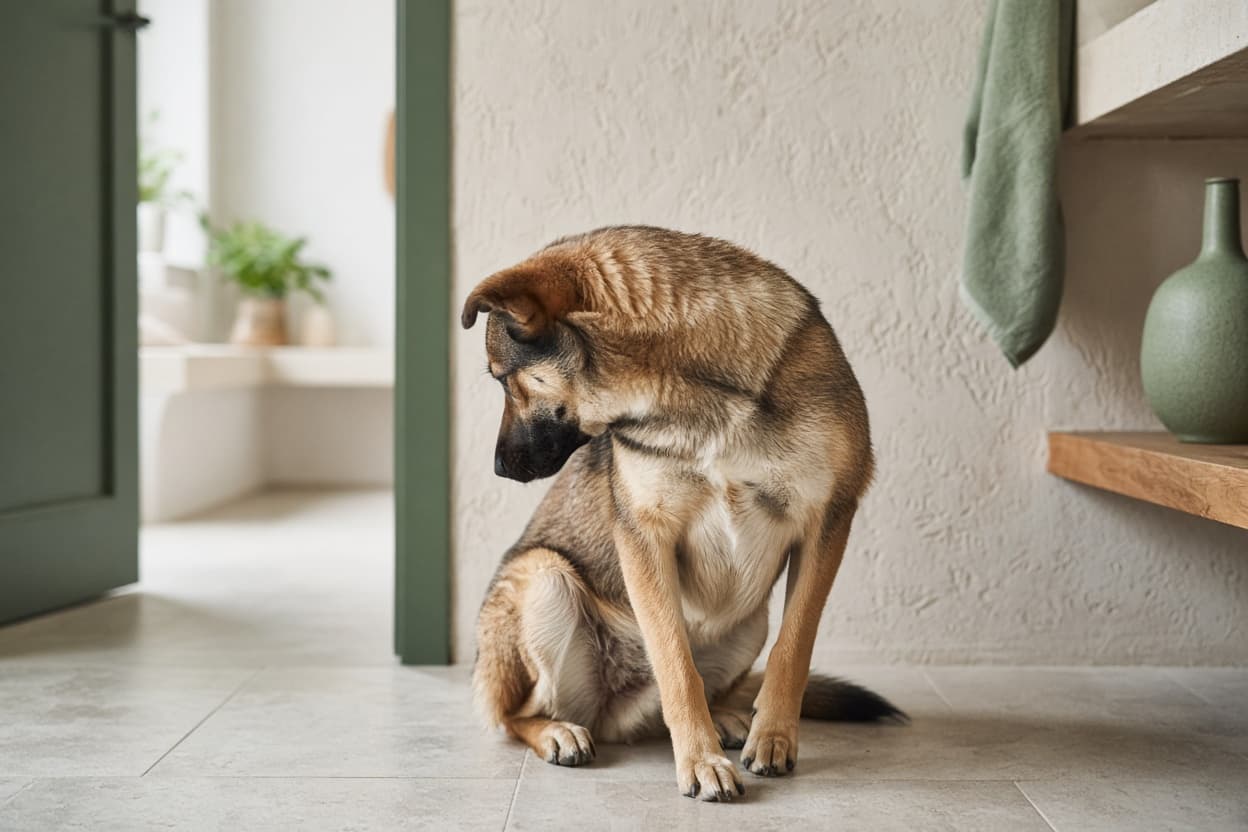
There is a point where you stop counting. Your dog scratches on the sofa, chews a paw before sleep, rubs against the hallway wall. And you have already bought two shampoos, a wipe and a spray that smelled of lavender. Nothing has changed, except the bathroom drawer.
This article will not tell you what your dog has. Nobody can know that without seeing the dog. What we will do is teach you to look, because skin says a great deal if you know where to focus, and because that information is what turns a vet visit into a useful one.
What is happening in the skin
Skin is a barrier. On the outside, a layer of dead cells and oil that keeps water in and irritants out. On the inside, nerve endings that report anything crossing that layer. When the barrier weakens, through dryness, over-washing, friction or something in the environment, those nerve endings fire at stimuli the dog never noticed before.
The dog scratches. Scratching opens small wounds in the barrier. The barrier weakens further. And so, within two or three days, an isolated itch becomes a cycle.
Understanding this changes the question. It is no longer which product do I buy, but what is weakening my dog's barrier and how do I protect it while I find out.
Where the scratching happens matters
Not all itching is alike, and the body map gives clues your vet will be grateful for.
Paws and belly. The areas that touch ground and grass. Itching concentrated there, especially in spring and summer and after walks, points to something in the environment settling on the skin.
Tail base and back. The fleas' favourite spot. A single parasite can cause days of itching in a sensitive dog, and you do not always see it.
Ears, face and armpits. Fold and moisture zones. When they flare together with other parts of the body, the skin is reacting generally, not locally.
One spot licked without stopping. Sometimes there is nothing on the skin at first. Licking is how the dog soothes itself, and over time it creates the lesion that then does itch.
When the scratching happens matters
Take notes for three days. Time, area, what happened in the previous hour. After the park. After meals. At night with the heating on. After Saturday's bath. After three days you will see a pattern or see that there is none, and both are information.
That log is the most valuable thing you can bring to the vet. An appointment with an owner who says he scratches a lot takes twenty minutes of questions. One with an owner who says he scratches his paws every afternoon after the park since early May goes straight to the point.
What you can do from today
While you observe, protect the barrier. None of this treats the cause, but all of it keeps the cycle from speeding up.
Cut baths to one every three or four weeks, with a mild, fragrance-free shampoo made for sensitive skin. Rinse until the water runs clear and dry well between the toes and in the folds.
Wipe paws and belly with an alcohol-free wipe or a damp cloth after walks. Remove what has stuck before it spends hours on the skin.
Brush two or three times a week with soft pins. It spreads natural oils and makes you look at the skin up close.
Keep up the parasite protection your vet recommended, in winter too.
Wash the bed with fragrance-free detergent and air the house every morning.
What is best avoided
Human shampoo, even baby shampoo: the pH is different and it dries. Vinegar, baking soda or other forum remedies on already irritated skin. Bathing every few days to soothe it: each bath strips the barrier you are trying to protect. Clipping the coat short: the coat protects from sun and friction. And switching kibble every week hoping to hit the right one: if you suspect food, do it in an orderly way with your vet.
The PerroAmante routine
Understand: three days of notes, area and moment, before buying anything. Care: a mild bath every three to four weeks, a wipe after walks, brushing three times a week, parasite protection up to date. Maintain: bed washed weekly, a skin check every Sunday in good light, and the log at hand for the next visit. Five minutes a day, no new products until you know what is missing.
When to see the vet
Without waiting if you see open wounds, blood, extensive scabs or bald patches; if the itching has gone on for more than two or three days without improving; if your dog is flat, eating less or feverish; or if scratching keeps the dog from sleeping. With puppies and senior dogs, sooner. And if the itch returns every spring or with each food change, book an appointment even if things are calm now: there are protocols only a professional can give you, and the earlier they start, the better.
This information is educational and does not replace a veterinary assessment.