PerroAmante
A home that does not smell of dog in fifteen minutes a week
Dog smell is not in the air; it is in five specific places. Finding them, treating them and not masking them is what separates a clean home from a perfumed one.
By Equipo PerroAmante · 3 September 2026 · 6 min read · Veterinary editorial team
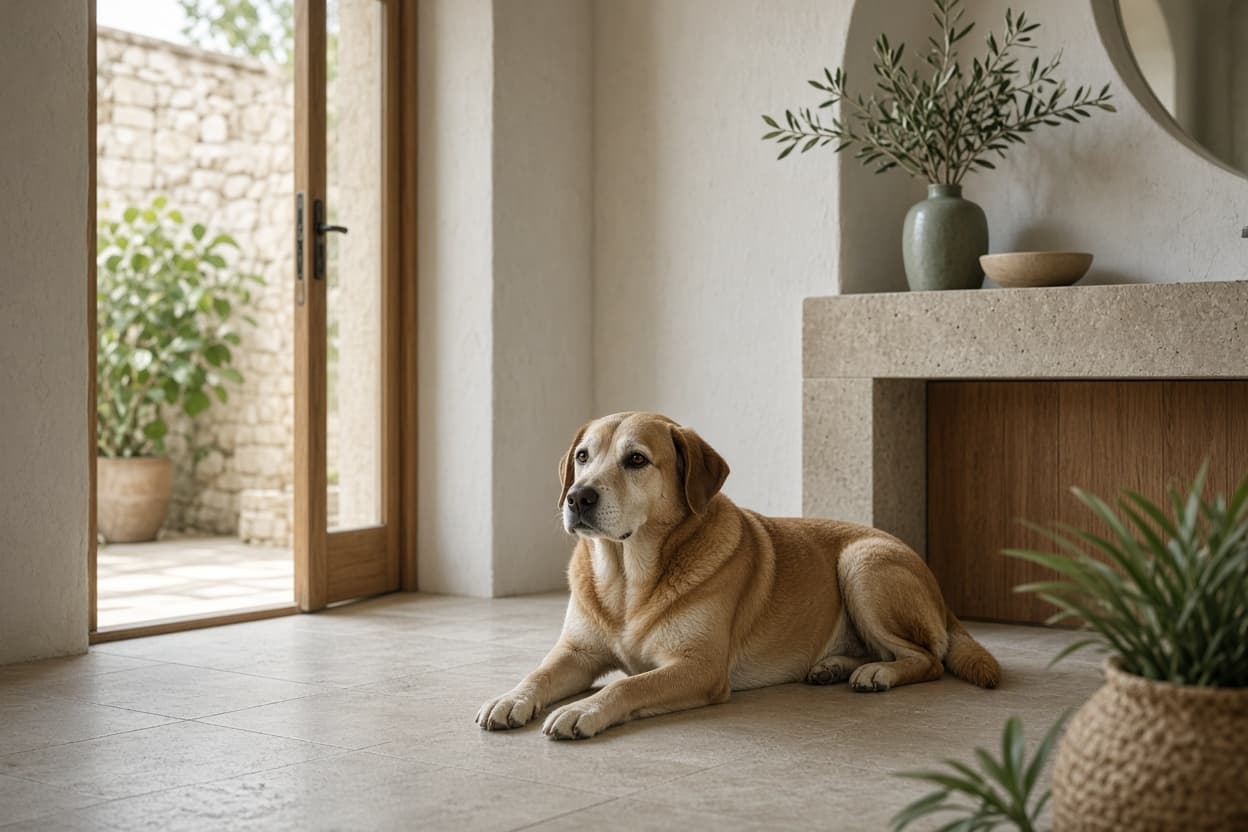
You come back from a weekend away, open the door and notice it. When you live inside you do not perceive it, but it is there, and when someone visits you wonder whether they notice too. They do. The good news is that dog smell in a home is almost never diffuse: it comes from five specific places, and each has a solution that does not involve an air freshener.
First, the nose
Before cleaning anything, locate. Put your nose to the dog: back, ears, mouth, paws, tail base. Then to its bed. To the sofa blanket. To the bowl. To the floor by the door and the corner where it lies. One minute, and you will know where your home's smell comes from. It is almost always two or three of these spots, not all of them.
If the smell comes mainly from the dog, from the ear, the mouth or the tail area, this article is not the one you need: what smells has a cause and the vet finds the cause. Cleaning the house will not resolve it.
The five places
The bed and blankets. They absorb skin oil and coat moisture and release them for days. It is spot number one in almost every home. Washing machine weekly, fragrance-free detergent, long cycle, extra rinse if the machine allows. Two sets means one is always clean and removes the excuse.
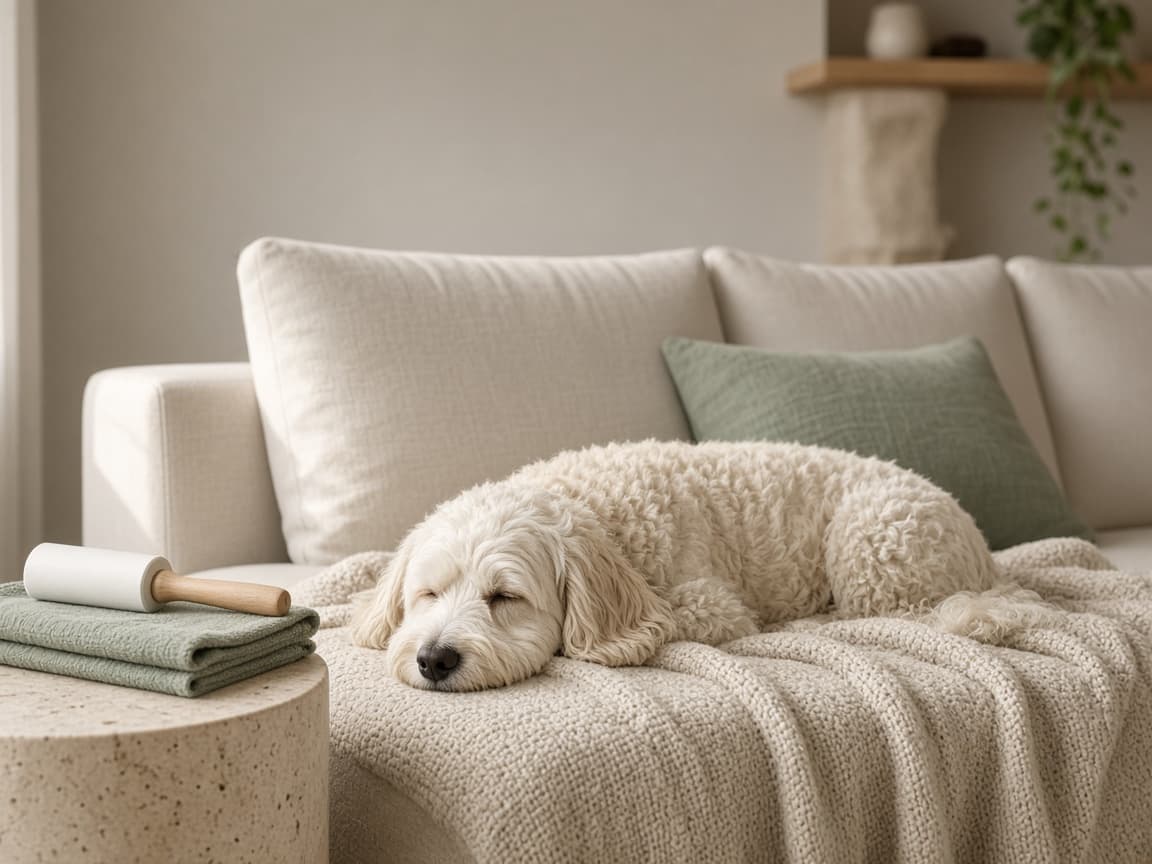
The sofa and rugs. Hair and oil stay in the fabric. A washable blanket on the dog's spot on the sofa catches ninety percent. The rest, a vacuum with an upholstery brush twice a week. Removable covers go in with the blankets.
Accumulated hair. Corners, under furniture, parquet gaps. Hair holds smell and dust and the air moves it through the house. Vacuum twice a week and, above all, brush the dog: every minute of brushing is hair that never reaches the floor.
The bowl and the toys. Food residue and saliva ferment within hours, especially in summer. Bowls in the dishwasher or hot water every day, thirty seconds. Rubber toys weekly; fabric ones with the blankets.
The floor and moisture. A dog that comes in wet and lies down leaves dampness that, without airing, smells within hours. Dry paws at the door, a dry dog before it lies down, and ten minutes of open windows every morning. Moisture is what turns dog smell into dog-house smell.
What to clean with
Your dog lives at floor level. It licks the floor, lies on it, and whatever stays on it passes to its skin and mouth. For floors, a cleaner formulated for homes with animals or water with a drop of neutral soap, then rinsed. Undiluted bleach, ammonia and heavily scented cleaners, no, at least where the dog lies. For textiles, fragrance-free detergent: perfumes add to the smell rather than removing it, and some dogs sneeze or scratch afterwards.
What does not work
Air fresheners, candles and diffusers: they cover for an hour and then blend with what was there. Dog colognes: they perfume skin that gets licked and can become irritated. Scrubbing everything with strong products: the dog licks the residue. And accepting that dogs smell and that is that: a healthy, dry, brushed dog smells very little. If your home smells, there is a source, and a source has a routine.
The fifteen minutes
Monday: bed, blankets and cover in the machine, three minutes to load and hang. Wednesday and Saturday: vacuum sofa, rugs and corners, five minutes each. Every day: bowl, thirty seconds, and windows open for ten minutes while you have breakfast. Fifteen active minutes a week, and a home that smells of nothing, which is how it should smell.
The PerroAmante routine
Understand: the smell comes from five places, not from the air, and sometimes from the dog. Care: weekly fragrance-free textiles, a washable blanket on the sofa, vacuum twice a week, bowl daily, floors with products that can be licked, dog and paws dry before lying down. Maintain: ten minutes of airing each morning, regular brushing of the dog, two sets of blankets, and your nose once a week to check it is working.
When to see the vet
If the smell clearly comes from the dog and not the house, especially if it is intense and from the ears, mouth or tail area, if it appeared suddenly or comes with itching, red skin or scooting along the floor. If your adult, house-trained dog urinates indoors, drinks more than usual or has accidents at night: that is not a cleaning problem. And in senior dogs, a general change in body odour is worth mentioning at the check-up.
This information is educational and does not replace a veterinary assessment.