PerroAmante
How to clean your dog's ears without cotton buds and without hurting it
A dog's ear canal is L-shaped and everything that gets in stays at the bottom. The right technique fills, massages and lets the dog do the rest.
By Equipo PerroAmante · 19 July 2026 · 6 min read · Veterinary editorial team
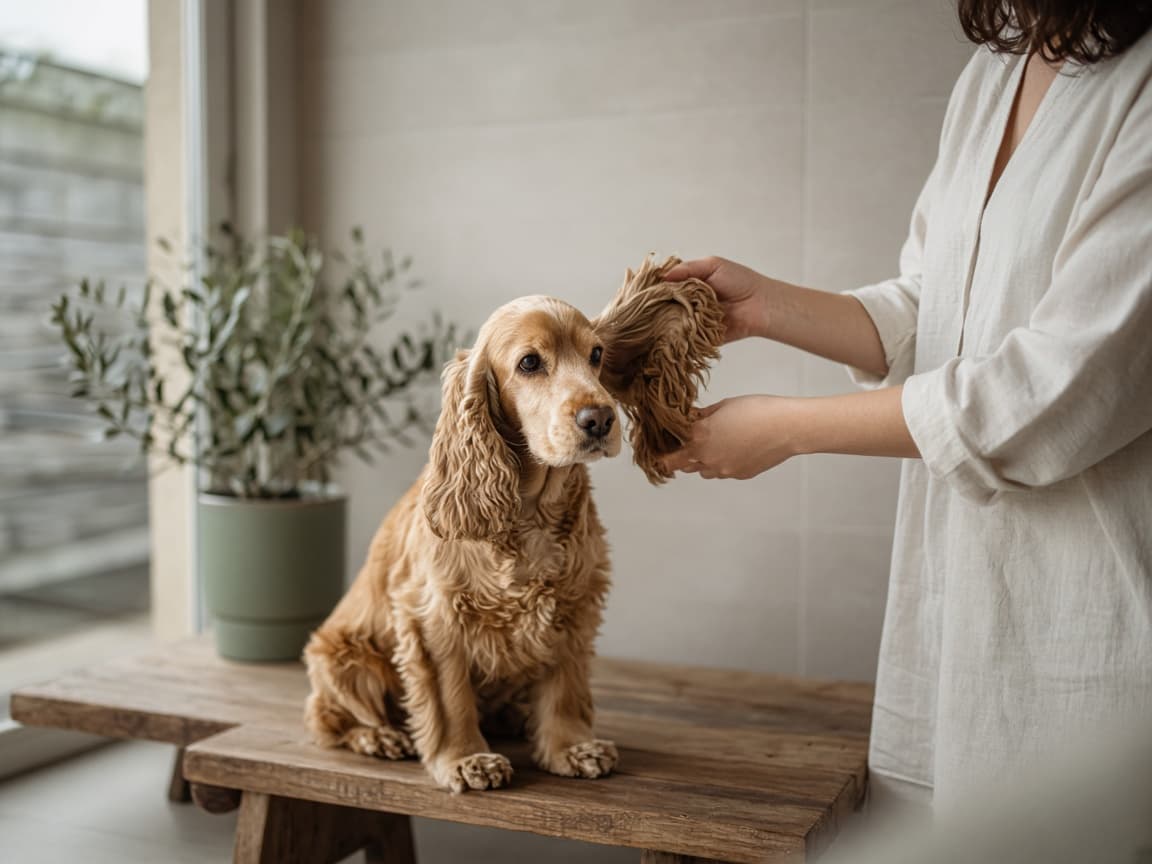
If you have ever tried to clean your dog's ears with a cotton bud, you have probably done two things without meaning to: pushed the wax deeper and taught your dog that ear cleaning is unpleasant. It is not your fault. A dog's ear simply does not work like ours.
An L-shaped canal
A dog's ear canal drops vertically from the ear flap and then turns almost at a right angle towards the eardrum. It is long, narrow, warm and poorly ventilated, especially in dogs with drop ears or a lot of hair inside. Everything that gets in, water, dust, hair, wax, tends to gather at the elbow of that L, where you cannot reach and where a cotton bud only compacts it.
A little wax is normal and protects the skin of the canal. The trouble starts when it accumulates, gets damp and the environment becomes ideal for yeasts and bacteria, always present, to multiply. Then come the smell, the head shaking and the scratching.
Look first, decide second
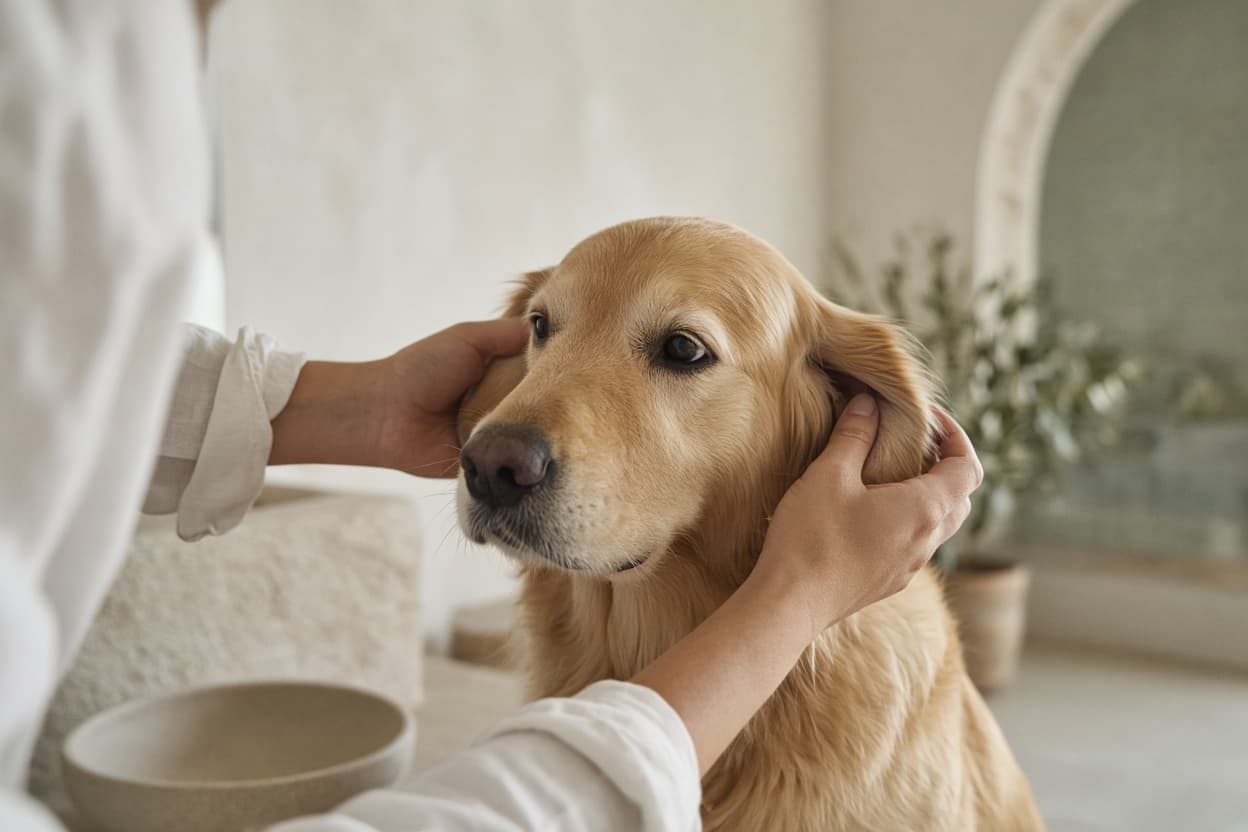
Once a week, in good light, lift the ear and observe. A healthy ear is pink, dry and smells of nothing. If so, nothing needs doing: over-cleaning a healthy ear irritates it.
If you see a moderate amount of light brown wax, without smell or redness, it is time to clean. If the ear is red, hot, swollen, discharging, very smelly, or your dog complains when you touch it, do not clean: that is for the vet, and the cleaner can make it worse or hide what the vet needs to see.
What you need
An ear cleaner formulated for dogs. It is designed to dissolve wax, carry it out and evaporate without leaving moisture. No water, saline, alcohol, peroxide or vinegar: they leave moisture or upset the skin of the canal.
Gauze or cotton pads, an old towel for the shaking moment, and treats. No cotton buds.
The technique in five steps
One. Sit somewhere easy to wipe down, with the dog calm and beside you. If it is the first time, spend two days just lifting the ear, touching the base and rewarding.
Two. Lift the ear and fill the canal with cleaner until you see the liquid at the opening. It looks like a lot; it is what it takes to reach the elbow of the L. Keep the tip of the bottle from touching the ear.
Three. Let go of the ear and massage the base, just below where it joins the head, for twenty to thirty seconds. You will hear a squelch: that is the cleaner moving at the bottom and loosening the wax.
Four. Step back and let the dog shake. This is the most important step and the one people try to avoid. Shaking brings the loosened wax up from the bottom to the opening of the canal, where you can reach.
Five. With gauze wrapped around your finger, wipe what has come out of the canal opening and the folds of the ear. Only as far as your finger reaches without forcing. Treat, then the other ear.
After a bath or a swim
Water that enters the canal stays in the L. After every bath or dip, dry the ear opening with gauze, let the dog shake and, if your dog has drop ears or swims often, a clean with the cleaner that same day helps carry the water out.
How often
In a healthy dog, every two to four weeks is usually enough, plus after getting wet. In dogs with drop ears, a lot of hair in the canal or who swim often, every two. In dogs with upright ears and a well-ventilated canal, sometimes looking and cleaning monthly or less is enough. The weekly check decides.
The PerroAmante routine
Understand: the ear's L collects at the bottom and a cotton bud compacts it. Care: dog ear cleaner, canal filled, twenty seconds of massage, a shake and gauze at the opening, every two to four weeks and after water. Maintain: a one-minute weekly check, drying after every bath, and noting the dates if one ear flares more than once so you can take the record to the vet.
When to see the vet
Before cleaning if the ear is red, hot, swollen, discharging, very smelly or painful to the touch. Without waiting if your dog tilts its head persistently, loses balance or walks in circles, or if the discomfort started suddenly in one ear after a walk in the countryside, because there may be a grass seed inside. And if the ears flare up again and again, the answer is not more cleaning: it is finding the cause with your vet.
This information is educational and does not replace a veterinary assessment.